
When the Night Sky Surprised Us: Asteroid Collides With the Moon
Have you ever gazed up at the Moon and wondered what’s happening on its surface? Last night, sky watchers around the world got a surprise! A sudden, bright flash appeared on the Moon, the result of an actual asteroid collision. It was so dramatic, people from all over started searching online for things like, “”asteroid to hit moon,”” making it a trending topic overnight.
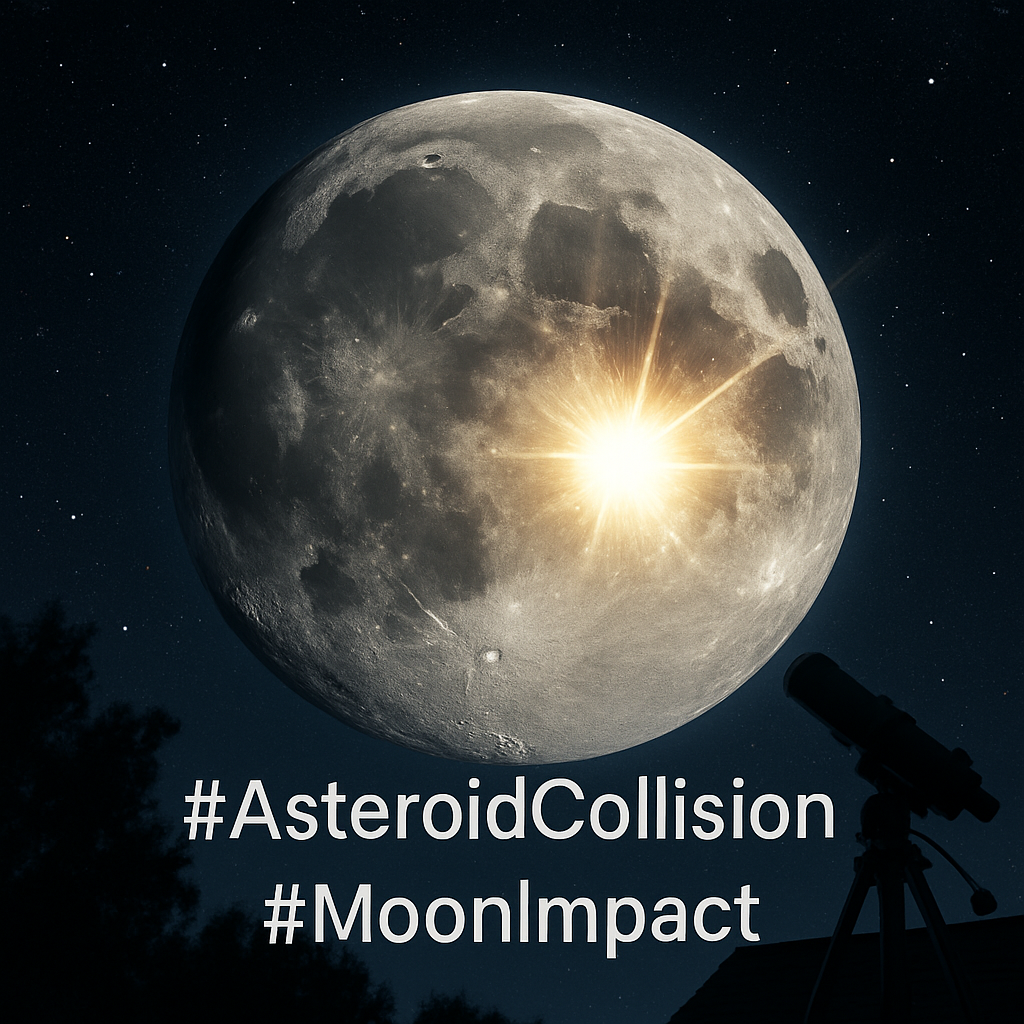
AI Generated
Table of Contents
Why Is an Asteroid Hitting the Moon Such a Big Deal?
Asteroids hit the Moon more often than you might think, but only rarely are they big or bright enough for us to watch from Earth. Unlike our planet, the Moon lacks a thick atmosphere. That means when space rocks fly in, there’s nothing to slow them down. They smash right into the rocky surface, causing immediate flashes that sometimes outshine anything else in the night sky. This latest asteroid collision with the Moon sparked excitement among expert astronomers and ordinary space enthusiasts alike. Imagine spotting such a flash through your backyard telescope—now that’s a story to tell!
What Happens During a Lunar Asteroid Collision?
When an asteroid crashes into the Moon:
- No air to slow it down — The Moon’s lack of atmosphere means impacts are extra powerful.
- Bright flashes occur — These look like sudden explosions of light, visible even from Earth.
- Crater formation — Each collision leaves a mark; the Moon’s surface tells the story of eons of impacts.
If you missed the action yourself, don’t worry. Many astronomers managed to record the bright flash on video, so everyone can enjoy this extraordinary moment.
See the Asteroid Impact for Yourself!
Here’s a video capturing the exact moment the asteroid struck the Moon. If you love space events, this is a must-watch:
Trending Now: “”Asteroid to Hit Moon”” — What Captured the Internet?
After the glowing event, searches for terms like “asteroid to hit moon” spiked on Google Trends. People everywhere wanted to learn more. Here’s why this topic caught fire:
- Curiosity — Folks wondered how often this really happens.
- Safety Concerns — Some worried if Earth could be next in line!
- Astronomy Interests — More people are picking up telescopes and turning their eyes skyward.
If you’ve been inspired to dive deeper into astronomy, you’re not alone. Social media, especially Twitter, lit up with sky watchers sharing their observations, videos, and excitement using hashtags like #MoonImpact and #AsteroidCollision.
Why Do Scientists Care About Moon Asteroid Collisions?
You might be thinking, “It’s just a rock hitting another rock, right?” Actually, every asteroid impact on the Moon is an opportunity for scientists to learn. Here’s what researchers hope to discover:
- Asteroid Composition and Speed — By studying these flashes, we can learn what the asteroid was made of and how fast it was traveling.
- History Lessons — The Moon preserves a record of impacts that can teach us how our solar system has evolved over billions of years.
- Protection Plans — Understanding these impacts helps us plan for the (rare) chance an asteroid heads our way, toward Earth.
It’s a bit like being a detective—every new flash is a clue!
How Can You Spot an Asteroid Impact on the Moon?
While witnessing an actual impact is rare, here’s how you can improve your odds:
- Use a telescope — Even a modest backyard scope can offer a close-up view of the Moon’s features.
- Follow astronomy alerts — Organizations often announce when events might be visible.
- Join a sky-watching group — Sharing tips and observations with others makes spotting events more likely—and more fun!
Have you ever seen a “shooting star” streak across the night? Imagine that, but happening on the Moon instead of our sky—a cosmic fireworks show just for those watching closely.
Why Do So Many People Love Space News?
Space has a way of drawing us in. Whether it’s a news headline about asteroid collisions with the Moon or a peek at Saturn’s rings, these moments remind us there’s a whole universe beyond our busy lives. Maybe you’re a diehard astronomy fan, or maybe you just like to be amazed every now and then. Either way, events like this lunar asteroid impact are a perfect excuse to look up—and dream big.
Get Involved: Become a Citizen Scientist!
You don’t need a PhD to help track asteroid impacts or explore space. Here’s how you can join the adventure:
- Download space apps — Track upcoming events and log your own sightings.
- Volunteer for observation projects — Many groups need help watching for flashes on the Moon.
- Share your passion — Post your observations or just chat with other stargazers online.
With smartphones and the internet, anyone can be a space explorer from their own backyard.
Final Thoughts: What’s Next in Space Watching?
Last night’s bright flash on the Moon was more than just a pretty light show. It was a powerful reminder of how vibrant and unpredictable our universe can be. From trending searches to viral videos, this asteroid impact stirred curiosity and excitement across the globe. So next time you catch the Moon outside your window, take a longer look. Who knows—you might spot the next cosmic event! Looking for more? Stay tuned to your favorite Space News sources and remember, the universe always has another surprise waiting. Don’t forget to share your thoughts or photos with #MoonImpact, #SpaceWatch, or your favorite space hashtag!
Tags:
Asteroid, Moon, Collision, BrightFlash, SpaceNews, Astronomy, LunarEvent, ScienceAlert, MoonImpact, AsteroidCollision
Viral Hash Tags:
#Asteroid #MoonImpact #SpaceNews #LunarEvent #SkyWatch #ScienceAlert #Astronomy #MoonFlash #AsteroidCollision #SpaceWatch
Follow for lore at da0ne.com